The best rock bands of the 60s, 70s, 80s and 90s
Best rock bands of the 60s, 70s, 80s and 90s: 10 per decade + 5 honorable mentions, with a brief history and guitarist focus.
The Best Rock Bands by Decade
If you ask me for a map of rock in 40 names, I’ll put it together by decade. Not because rock magically changes every 10 years, but because the sound, the role of the guitar, the way of composing, and even the attitude change. So I put together my selection of the best rock bands by decade
And yes: for me there’s an inevitable triad (Beatles, Stones, Zeppelin). But as a guitarist, I can’t look at all this without including the DNA of Hendrix, BB King, Clapton … and that glorious moment when the Ramones hit “reset” when everything seemed to demand sophistication.
How I chose “the best rock bands of the 60s, 70s, 80s and 90s” (clear criteria)
- Influence: how many people changed their playing/composing/sounding style afterward.
- Songs and catalog: one album or one hit is not enough.
- Sound innovation: riffs, production, arrangements, identity.
- Guitarist impact: copyable resources (riffs, textures, rhythm, tone).
Rule: 10 essentials per decade + 5 honorable mentions.
The 60s: the modern language of rock is born (and the guitar is unleashed)
| 1960s | What dominates | Typical equipment/sound | Guitar technique | How you copy it today |
|---|---|---|---|---|
| Rock & roll → blues rock/psychedelia | Amp saturation, fuzz, wah | Marshalls/Vox, early fuzz, wah | Riffs + chords with color | Smooth overdrive + fuzz, less gain, more dynamics |
| Recording studio as an instrument | Layers, panning, arrangements | Double tracking, ambiences | “Parts” that fit together | Record yourself doubled: a rhythmic one + a response |
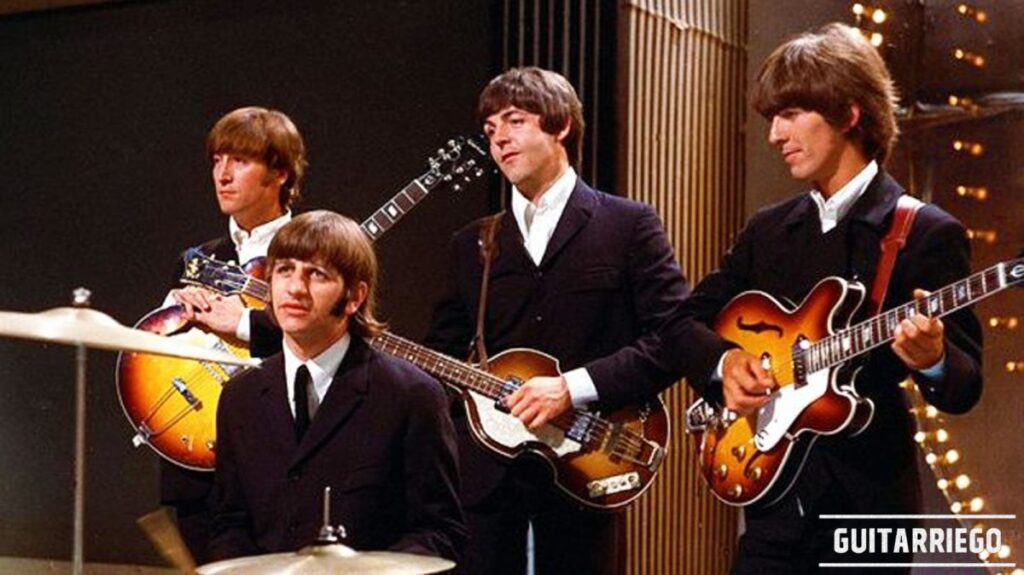
Top ten rock bands of the 60s
- The Beatles
Started as a beat/rock and roll band and within a few years became a laboratory for composition and recording studio. Thus, the story here is one of rapid growth: from simple songs to complex arrangements without losing melody. As a guitarist, they teach you to think of the guitar as part of a whole. - The Rolling Stones
Were born with blues and R&B as their banner, and built an identity as a “road band”: groove, riffs, and attitude. Their history is one of consistency: decades upholding “dirty rock” as their tradebrand. Thus, Keith is a reminder that rock lives in timing. - The Who
Emerged from the mod scene and transformed into a live energy monster. They smashed instruments, cranked up the volume, and pushed the boundaries of “rock as spectacle.” Pete Townshend turned the power chord into a narrative weapon. - The Jimi Hendrix Experience
Hendrix arrives in London, forms a trio, and in a couple of albums redefines the instrument. The short story: a guitarist appears who uses the amp as an extension of his body (feedback, fuzz, wah). If you play rock, you indirectly owe him something. - Cream
Trio with superpowers: Clapton + Jack Bruce + Ginger Baker. Their story is “blues taken to the extreme” with improvisation and volume. They are a turning point: they paved the way for hard rock and stadium virtuosity. - The Doors
A “strange” band: prominent keyboards, atmospheric guitars, and dark lyrics. Their story is that they proved rock can be less about riffs and more about atmosphere. Ideal for guitarists who love textures. - Led Zeppelin (debuted in 1969: immediate impact)
rose from the ashes of the Yardbirds and sounded like giants from their very first hit. Historically: they took blues, folk, and heavy rock and made it epic. Guitar style: heavy riffs + strong/soft dynamics. - The Kinks
Started early with raw distortion and evolved into exquisitely refined songs. Their story is one of “sharp riffs to British pop irony.” Much of what would later become guitar rock was born here. - Jefferson Airplane,
An emblem of psychedelic San Francisco: rock becomes a cultural experience. Their history is tied to the counterculture and expanding formats. For guitarists, the lesson is color: it’s not all about riffs. - The Velvet Underground
Almost an anti-rock of their time: repetition, noise, minimalism, and an artistic attitude. Their story is one of quiet influence: perhaps they weren’t the most mainstream act, but they shaped the alternative future.
5 honorable mentions for bands from the 60s
- The Byrds (jangle/12 strings that set a school)
- The Yardbirds (incubator of guitarists and sounds)
- The Beach Boys (harmonies + out-of-this-world production)
- Creedence Clearwater Revival (a straightforward and timeless song)
- Janis Joplin / Big Brother (blues rock with soul)
If you like it… listen…
- If you like The Beatles (melody + arrangements): The Kinks, The Byrds, The Beach Boys
- If you like Stones (blues + groove): Creedence Clearwater Revival, The Yardbirds, The Who
- If you like Hendrix (psychedelia + tone): Cream, Jefferson Airplane, The Doors
- If you like the alternative side (attitude + art): The Velvet Underground, The Doors, The Kinks
Let us know in the comments if you’re #TeamBeatles or #TeamStones and share your top 1-2-3 from the 60s.
Here you will find more information about the top bands of the 60s.
The 70s: the era of the giant riff (and the punk backlash)
| 1970s | What dominates | Typical equipment/sound | Guitar technique | How you copy it today |
|---|---|---|---|---|
| Hard rock / prog / stadium rock | Loud amp, heavy riffs | Marshall/Hiwatt, fuzz/OD, phaser | Riff + dynamics + “wall” | Less gain, more attack; solid rhythm |
| Punk (end of decade) | Simplicity and speed | Direct distortion | Downstrokes, power chords | Metronome + steady right hand |
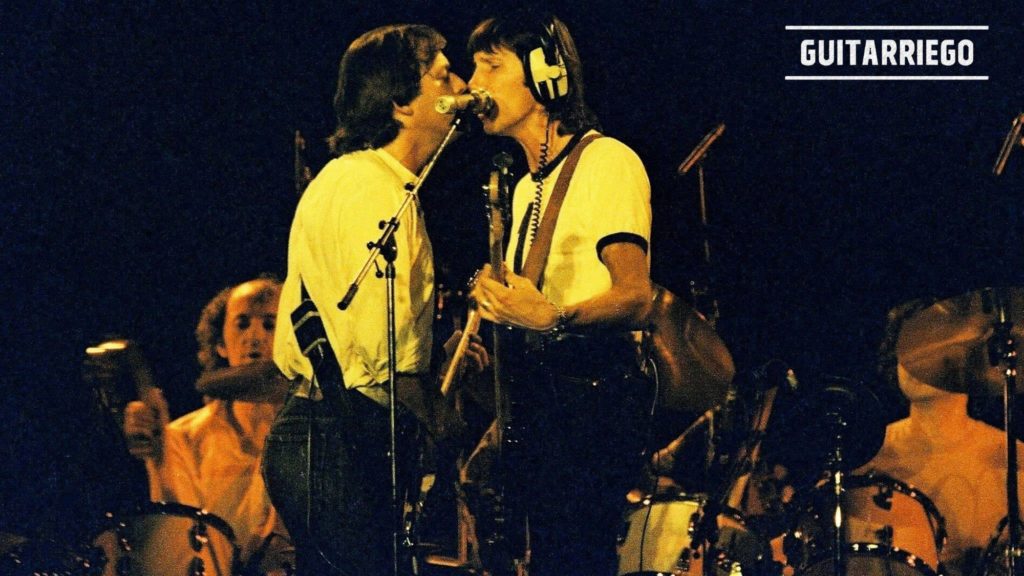
Top ten bands of the 70s
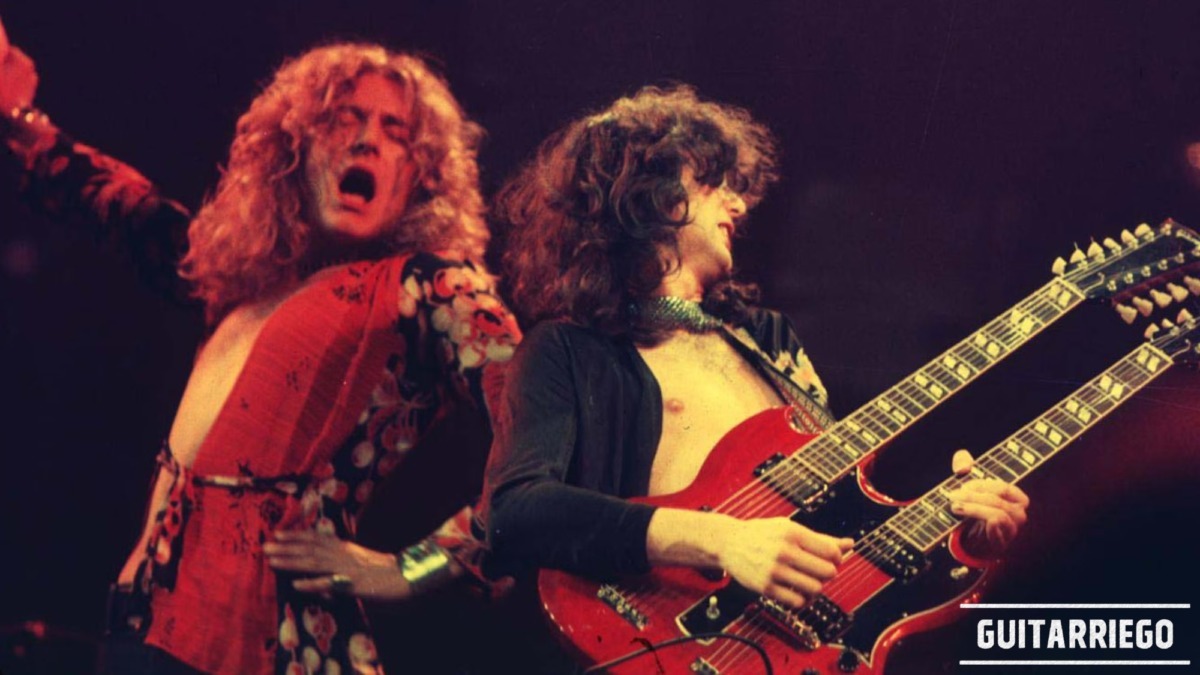
- Led Zeppelin
Dominated the 70s, evolving from heavy blues to full-blown epic sound. Their story is one of expansion: riffs, ballads, folk, grooves. For guitar: the Page combo = riff + texture + intelligent production. - Pink Floyd
Started out psychedelic and became architects of concept albums. Short story: they turn albums into “journeys.” Gilmour teaches economy: a single note with intention can be the perfect solo. - Black Sabbath
From Birmingham to the world: dark riffs that invented an aesthetic. Their story is simple and enormous: without Sabbath, heavy rock is incomprehensible. Iommi defines the heavy riff as a language. - Deep Purple
Hard rock with muscle and virtuosity. History: incendiary shows and anthemic riffs. For guitar: precision and energy; for band: playing loud “together”. - Queen
Started with heavy rock and became a machine of songs and arrangements. History: they reinvented their sound a thousand times without losing their identity. Brian May is proof that your tone can be distinctive. - AC/DC
From pub rock to stadiums with an unbeatable formula. History: consistency and timeless songs. Malcolm Young is the patron saint of rhythm rock: powerful groove. - Aerosmith
American rock with swing and hooks. History: highs and lows, but with a catalog that defines classic hard rock. For guitar: riffs that sing. - Ramones.
Your point is key: they appear when rock gets serious. Story: 2 minutes, 3 chords, speed, and a vibe that loosens things up. For guitar: right hand and attitude. - The Clash
Punk with ideas and blends: reggae, ska, classic rock. Story: they take punk energy and turn it into a vision. For guitar: rhythm with accents and songs with a message. - The Police (late 70s, 80s influence)
Trio that blends punk, reggae, and pop with a “new” sound. History: with just a few albums, they defined an era. For guitar: delays and spaces, leave space / play with air.
5 honorable mentions for bands from the 70s:
- Sex Pistols
- Eagles
- Dire Straits
- KISS
- Heart
If you like it… listen…
- If you like Led Zeppelin (riff + dynamics): Black Sabbath, Deep Purple, AC/DC
- If you like Pink Floyd (atmosphere + epic): Queen, Dire Straits, The Police
- If you like heavy rock (riffs rule): Black Sabbath, Deep Purple, AC/DC
- If you like punk “reset” (simplicity + energy): Ramones, Sex Pistols, The Clash
Choose: giant riffs (Zeppelin/Sabbath) or punk reset (Ramones/Clash)?
Here you will find more information about the top bands of the 70s.
The 80s: technique, production and “sparkly” guitars
| 1980s | What dominates | Typical equipment/sound | Guitar technique | How you copy it today |
|---|---|---|---|---|
| Hard rock / metal | Controlled gain, melodic solos | Marshall/JCM, chorus, delay | Palm mute, bends, vibrato | Subtle chorus + short delay; neat vibrato |
| New wave / post-punk | Textures and rhythms | Clean + chorus/delay | Arpeggios, airy rhythms | Fewer notes; more rhythmic pattern |
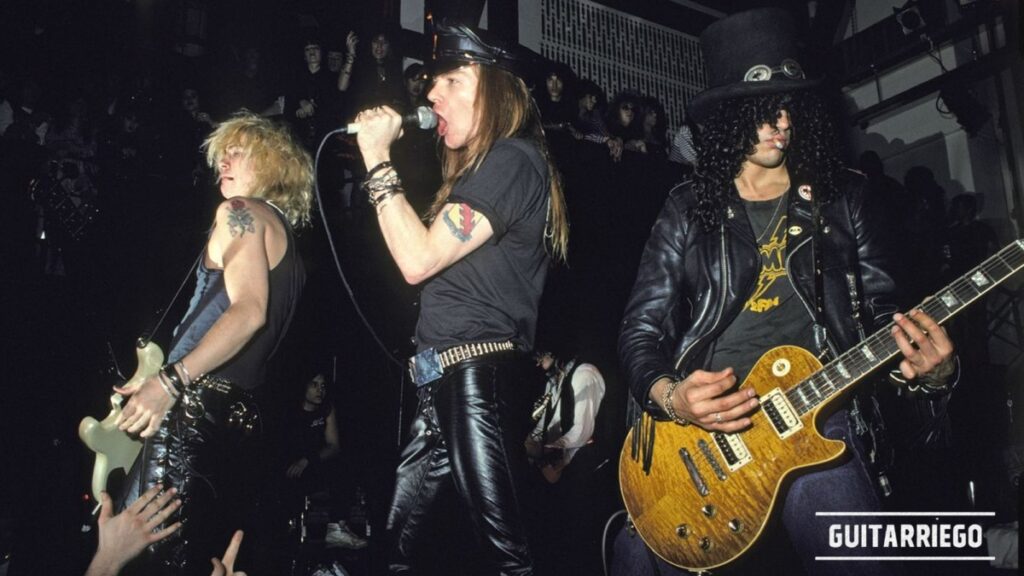
Top ten bands of the 80s
- Metallica
Started as a thrash band and ended up a global phenomenon. History: riffs and precision as their signature. For guitar: iron rhythm, palm muting, and synchronization. - Guns N’ Roses
A streetwise explosion in a polished era. History: They bring back danger and song. Guitar: Classic rock riffs + singable solos. - U2
Go from post-punk to stadium rock. History: sonic identity through textures. The Edge demonstrates that well-used delay is composition. - R.E.M.
Became the cornerstone of alternative music. History: consistent albums and a distinct sensibility. For guitar: jangle and rhythmic arrangements. - The Smiths
In just a few years, they built a unique sound. Story: Johnny Marr as the architect of layered guitars. Lesson: You can be a virtuoso without shredding. - Red Hot Chili Peppers
From funk-punk to the mainstream. History: A search for identity that culminates in their own formula. For guitar: rhythm with groove (and learning to play “in your pocket”). - Van Halen
Revolutionized rock guitar with technique and charisma. History: Eddie changed the standard for the instrument. For you: it’s not just tapping, it’s attack, swing, and sound. - Bon Jovi
Stadium pop-rock as science. History: anthems and sing-along production. Guitar: simple riffs, arrangements that support the vocals. - The Cure
From post-punk to dark/pop epic. History: consistent aesthetics and emotion. For guitar: chorus/delay like paint. - Depeche Mode (a huge influence on the rock scene)
Although more synth-driven, their history is key to the 80s atmosphere. They influenced tons of rock bands in terms of darkness and production. As a guitarist, they teach you that “rock” is also about pulse and aesthetics.
5 honorable mentions for bands from the 80s
- Iron Maiden
- Whitesnake
- Mötley Crüe
- Pixies
- Sonic Youth
If you like it… listen…
- If you like Metallica (iron rhythm): Iron Maiden, Guns N’ Roses, Van Halen
- If you like Guns N’ Roses (streetwise hard rock): Aerosmith (70s), Whitesnake, Bon Jovi
- If you like U2 (texture + delay): The Cure, The Smiths, R.E.M.
- If you like experimental/noise: Sonic Youth, Pixies, The Cure
Are you into riffs (Metallica/GNR) or textures (U2/Cure)?
Here you will find more information about the top bands of the 80s.
The 90s: song first, pose later (grunge/alt/britpop)
| 1990s | What dominates | Typical equipment/sound | Guitar technique | How you copy it today |
|---|---|---|---|---|
| Grunge / alt | Raw, dynamic distortion | Fuzz/DS, drop tunings | Loud/quiet, power chords | Clean verses, wall choruses |
| Britpop / indie | Pop guitar with attitude | Medium overdrive, layers | Simple riffs, hooks | Think guitar melody |
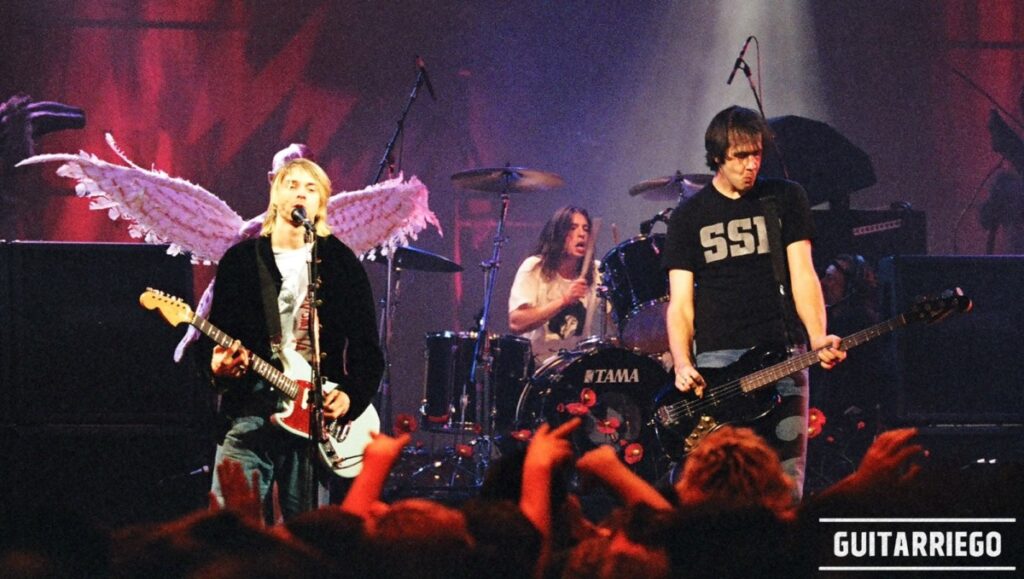
Top ten rock bands of the 90s
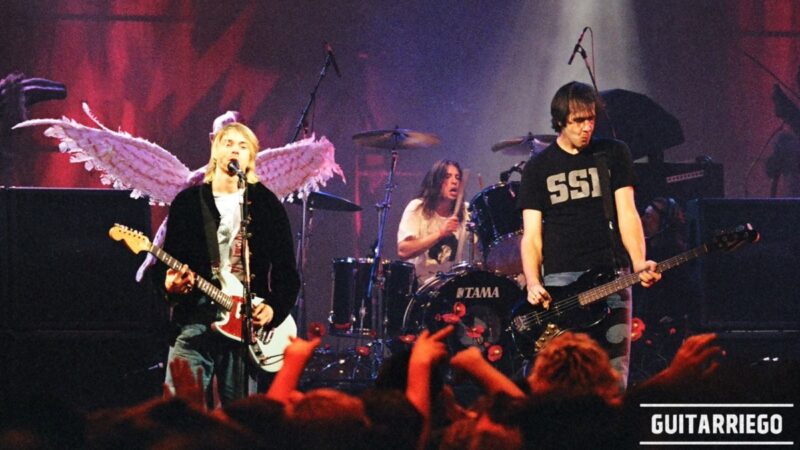
- Nirvana
History: They take punk, pop, and distortion and make it massive. Kurt shows that a riff can be simple and devastating. For guitar: dynamic and song-driven. - Pearl Jam
They bring classic rock into the 90s with songs that age well. For guitar: airy riffs, arpeggios, and great accompaniment. - Radiohead
History: They started out as alternative artists and became sonic explorers. For guitar: unusual textures and choices that work because they serve the song. - Oasis
History: giant anthems with fat guitars and British attitude. For guitar: simple riffs + wall of sound in the recording studio. - Soundgarden
History: Heavy grunge with unusual tunings and riffs. For guitar: Breaking away from obvious patterns without losing punch. - Alice in Chains
Darkness and unique vocal harmonies. For guitar: dense riffs, a doom-like feel but catchy. - Red Hot Chili Peppers
They finally found their definitive form in the 90s. For guitar: funky/rock rhythm, attack control. - Blur
Britpop with inventiveness and stylistic shifts. For guitar: arrangements that “respond” to the vocals, they don’t just accompany them. - Smashing Pumpkins
Layers of fuzz + melody + epic. For guitar: How to build walls of sound without losing the song. - R.E.M.
They maintain quality and define alternative sensibility even in the 90s. For guitar: jangle + solid composition.
5 honorable mentions for bands from the 90s
- Stone Temple Pilots
- Green Day
- Foo Fighters
- Rage Against the Machine
- Nine Inch Nails
If you like it… listen…
- If you like Nirvana (simple + devastating): Pixies (80s), Foo Fighters, Green Day
- If you like Pearl Jam (90s classic rock): Stone Temple Pilots, Oasis, R.E.M.
- If you like Soundgarden/Alice in Chains (heavy with identity): Rage Against the Machine, Smashing Pumpkins, Nine Inch Nails
- If you like Radiohead (exploration): Smashing Pumpkins, Blur, Nine Inch Nails
From the 90s: grunge, britpop, or weird alt? Which one resonated with you the most?
Here you will find more information about the top bands of the 90s.
Bonus for guitarists (and why the Ramones matter so much)
If you like Beatles / Stones / Zeppelin: what to listen to next (by decade)
- Beatles → Kinks (60s), Queen (70s), R.E.M. (80s), Oasis (90s)
- Stones → Creedence (60s), Aerosmith (70s), Guns N’ Roses (80s), Pearl Jam (90s)
- Zeppelin → Hendrix Exp. (60s), Sabbath (70s), Van Halen (80s), Soundgarden (90s)
The Ramones “reset” (simplicity ≠ little value)
As a guitarist, it’s easy to buy into the idea that “if it’s not complex, it’s worthless.” The Ramones bring you back down to earth: a good song + energy + timing can be more influential than any amount of practice. And that reset opens doors: from punk to alt rock and grunge.
10 “gateway” songs (with guitar in hand)
- Beatles – Day Tripper
- Rolling Stones – (I Can’t Get No) Satisfaction
- Jimi Hendrix – Purple Haze
- Led Zeppelin – Whole Lotta Love
- Black Sabbath – Paranoid
- AC/DC – Back in Black
- U2 – Where the Streets Have No Name
- Metallica – Enter Sandman
- Nirvana – Smells Like Teen Spirit
- Radiohead – Creep
Share your #1 from each decade and which band was the most influential in Rock for you.
Common mistakes when ranking rock bands by decade
- Mixing decades without context (list “bag of names”).
- Confusing popularity with influence.
- Not explaining why (especially if you’re a musician).
- Forgetting that rock is also about production and aesthetics, not just riffs.
FAQ
What is the best band of all time?
The Beatles for overall impact; Zeppelin if I look at it from a heavy rock guitar perspective
Does punk count as rock?
Yes: pure rock and roll.
Which decade was most important for the guitar?
The 60s invented language, the 70s consolidated riffs and big sound, the 80s pushed technique/production, the 90s brought back song and rhythm.
You might also be interested in this amazing article about the best guitarists in history.
What is your list of the best rock bands from the 60s, 70s, 80s, and 90s?